
Nairobi Real Estate Neighbourhoods: One City, Many Markets
Ask five people where to invest and you will get five different answers. Most point at the same handful of names: Karen, Lavington, Kileleshwa, Kilimani. But those answers miss something important. Nairobi real estate neighbourhoods are not interchangeable “good areas.” Each one behaves like a separate market. Each has its own tenant profile, price band and demand driver. Sometimes that difference shows up within a few hundred metres.
A recent Forbes Business Council piece on African real estate makes this point well. A strong investment isn’t about picking a famous neighborhood. It’s about knowing where demand is actually emerging on the ground. Nairobi proves this every day. Here is what it looks like when you compare the neighbourhoods we work in.
What “Nairobi real estate neighbourhoods” actually means on the ground
People often use this phrase loosely, as if Nairobi’s suburbs sit on one continuous scale from cheap to expensive. They don’t.
Nairobi real estate neighbourhoods split along tenant type, density and buyer intent. Price comes later.
A family hunting for a quarter-acre plot and a first-time investor hunting for a 1-bedroom off-plan unit are not shopping the same market. Both might describe their purchase as “Nairobi real estate,” but that’s where the similarity ends.
Karen: space over density
Karen stands apart from the other Nairobi real estate neighbourhoods on this list.
Large plots and low-density zoning define the area. So does the longer commute into the CBD. These factors attract a specific buyer: usually a family that prioritises space, privacy and a semi-rural feel over walkability or nightlife.
Karen doesn’t compete with Kilimani or Lavington for the same tenant. It occupies its own category. That positioning, not the suburb’s name recognition, should drive how you market and price a property there.
Lavington: the rental ladder
Lavington shows the clearest rental demand signal among Nairobi real estate neighbourhoods right now.
A furnished 2-bedroom on Mararo Road is listed at KES 175,000 a month.
An unfurnished 3-bedroom on Kingara Road sits at KES 105,000 a month.
A 5-bedroom executive townhouse with a DSQ commands KES 450,000 a month inclusive.
That spread tells a story. Lavington isn’t one price point, it’s a ladder. Furnished-executive, family-unfurnished and top-tier inclusive segments all sit in the same suburb, but they serve entirely different tenants.
Kileleshwa and Kilimani: where demand turns vertical
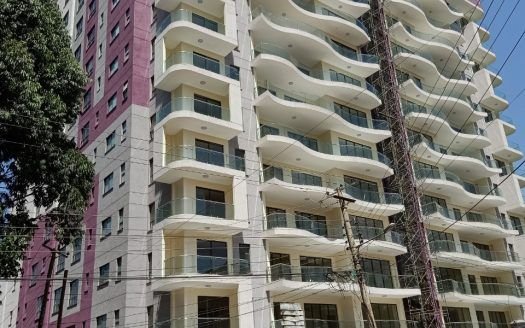
Kileleshwa and Kilimani lead the pack for off-plan and vertical development. Take one Kilimani off-plan development currently on our books.
Its 1-bedroom units start from KES 5.7 million. A 1-bedroom plus study starts from KES 7.1 million. Two-bedroom units start from KES 10.7 million.
Young professionals and first-time investors drive this demand. Many can’t yet afford Lavington’s rental ladder as tenants, but they want to own property in a comparable location.
This buyer looks nothing like the Karen or Lavington buyer. They’re price-sensitive and growth-oriented, and they’re often a diaspora or first-time local investor.
Runda: a fifth data point
Runda adds a useful fifth comparison point among Nairobi real estate neighbourhoods.
A 4-bedroom villa in Runda Ridge is currently listed at KES 230,000 a month. That places it closer to Lavington’s upper rental band than to Karen’s low-density, large-plot character, even though Runda and Karen share a similar reputation for space and privacy.
The pattern repeats here: reputation and actual market position often diverge once you check real listing data instead of trusting a neighbourhood’s name.
How to evaluate Nairobi real estate neighbourhoods before you invest
Don’t treat any of these five as one undifferentiated growth story. Investors who do often end up with a property that looks good on paper in a “hot” area but underperforms in practice, because nobody matched it to the right tenant.
Ask three questions before you buy into any of Nairobi’s real estate neighbourhoods:
- Who is the actual tenant or buyer this specific street serves, not the suburb as a whole
- Where does this listing sit on that neighbourhood’s own price ladder: top, middle or entry tier
- Does the property type match local demand: furnished rental, family unfurnished, or off-plan ownership
Answer those honestly, street by street. That’s what separates a strong pick among Nairobi real estate neighbourhoods from a property that simply borrowed a famous postcode’s reputation.
The takeaway
Karen, Lavington, Kileleshwa, Kilimani and Runda don’t compete with each other. They serve different tenants, different price points and different investment horizons, often within a five-kilometre radius.
The suburb’s name tells you where a property sits on a map. It doesn’t tell you who wants to live there or what they’ll pay. Get that second part right, and the neighbourhood almost takes care of itself.
Looking to buy or let in one of these Nairobi real estate neighbourhoods? Browse current rental listings or see our sale listings with Azizi Realtors.