Construction Quality in Kenya: Lessons From Karibu Homes
Construction quality in Kenya becomes a very different conversation when the home you spent years paying for is the home you may no longer feel safe living in.
That is the human side of the recent Karibu Homes situation in Athi River.
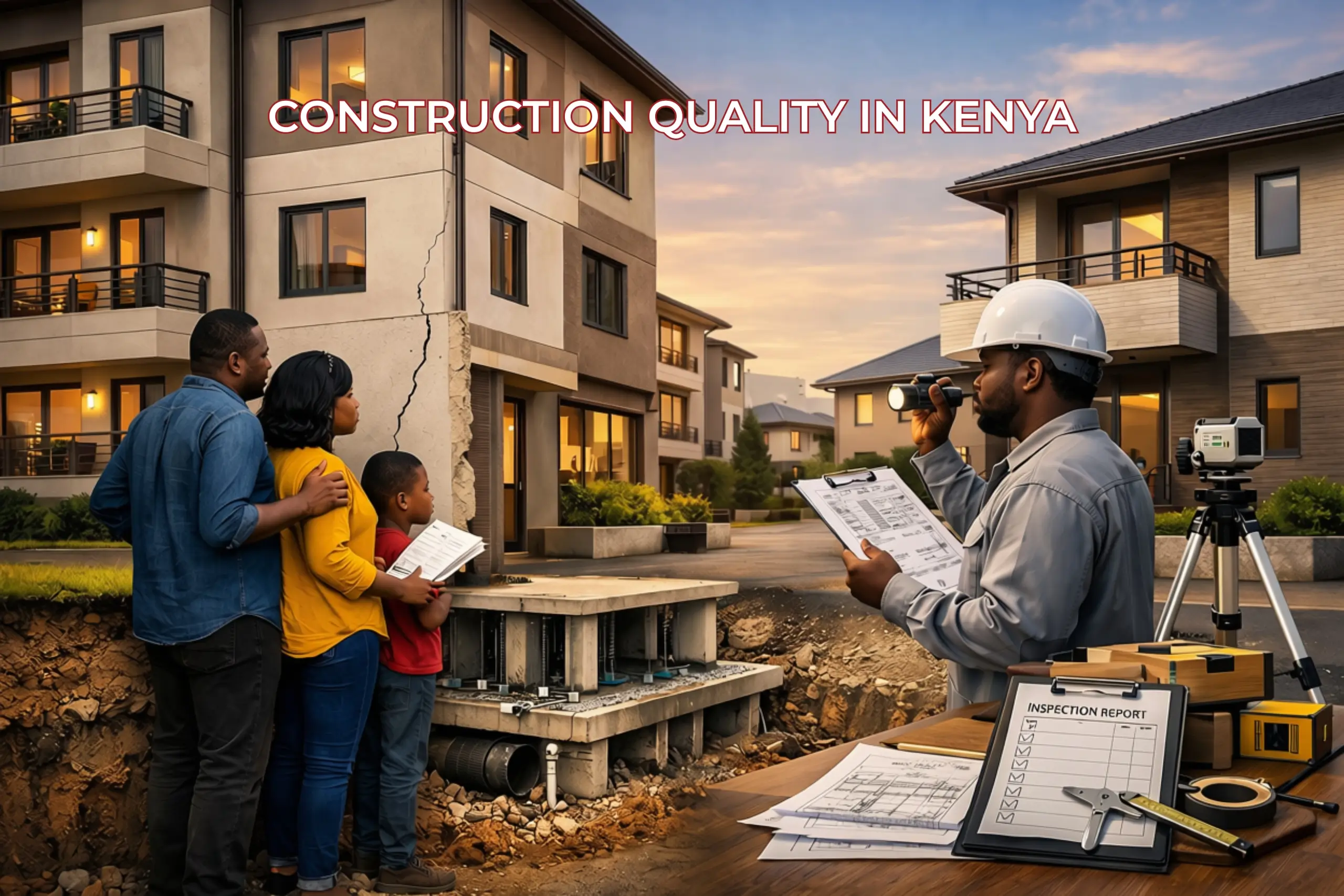
The September 2026 Daily Nation investigation reported that at least 45 homeowners at the development had experienced widening cracks, with some affected blocks showing signs of sinking and shifting. The development has about 500 units across 63 apartment blocks. One homeowner told the newspaper that he was still servicing a 20 year mortgage while also paying rent after leaving his home.
A multi agency inspection conducted in April 2026 reported concerns including unstable soil beneath affected blocks, inadequate stormwater management, compromised workmanship, poor concrete strength and concerns about the foundation design and construction. The report recommended structural integrity testing and retrofitting of the affected blocks.
The developer disputes those findings. According to the same investigation, the developer’s consultants concluded that poor drainage and maintenance, rather than structural defects, caused the cracking; they also argued that the owners and resident management structures assumed responsibility for ongoing maintenance after completion.
This dispute is still important because it leaves buyers with a question that has nothing to do with one estate:
How much can you actually know about a building before you buy it?
Why construction quality in Kenya matters before you buy
When people view a property, they usually notice the things that are easy to see.
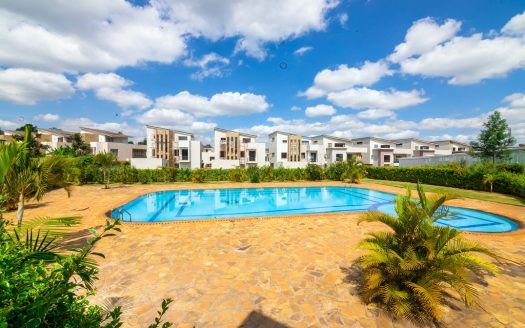
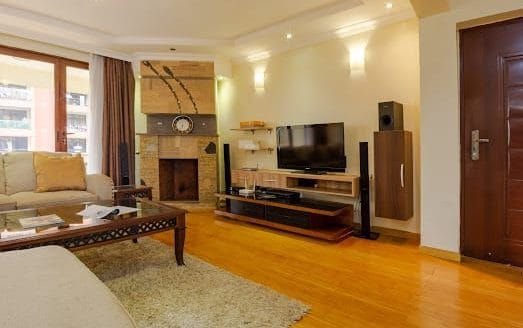
The kitchen, flooring, natural light, fittings, the view, or even the swimming pool.
But some of the most important parts of a building are hidden.
The foundation is hidden. Much of the structural system is hidden. Drainage routes can be hidden.
Construction workmanship can become difficult to assess once finishes are installed.
That creates an information gap between the person selling the property and the person buying it. This is especially important for investors.
An investor may be buying a property for rental income rather than living there. A problem with the structure, drainage or common areas can still affect the asset, tenant experience, maintenance costs and long term value.
For an expatriate or diaspora buyer, the distance adds another layer.
You may be thousands of kilometres away when construction happens or you may only see the finished property during a short viewing.
That makes verification even more important.
Kenya already has construction standards
It is important not to turn the Karibu Homes story into the claim that Kenya has no construction regulation.
It does.
The National Building Code 2024 replaced the old 1968 building by laws and provides a national framework covering areas including structural design, building materials and construction, quality, inspection, maintenance and demolition. It came into force on March 1, 2025.
The National Construction Authority also requires public and private sector developers to register their construction projects.
The Authority requires approved architectural and structural drawings, registered professionals, registered contractors and subcontractors, and relevant statutory approvals.
That gives buyers something useful to understand:
A serious property purchase involves checking the building, not just the title.
What construction quality in Kenya should make you ask
A title search reveals important information about ownership, but it does not tell you whether the contractor constructed the building properly.
That means property due diligence should go further.
Before buying a new development, ask the following:
- For the project’s registration details and confirm the developer has completed the required approvals and documentation.
- Who the architect, structural engineer and quantity surveyor were.
- Whether the project has the approved architectural and structural drawings.
- Ask about the contractor and check whether the developer properly registered the project with the National Construction Authority.
The NCA provides a searchable database of approved projects where users can search by project ID or developer name.
That is useful because it moves the buyer from:
The agent says that the authorities approved the project.
to:
Can I verify it?
A new home still deserves inspection
Buyers easily assume that a new property does not need an inspection because no one has ever lived in it; however, this is precisely when they must clearly understand what the developer is delivering.
A viewing with an agent is not a structural inspection.
A buyer may be able to spot visible cracks, water stains, uneven floors, sticking doors or signs of moisture.
But a technical inspection is different.
For a completed property, an independent professional can assess the condition of visible elements and identify concerns that deserve further investigation.
For a development under construction, the questions are different.
What did the contractor build, and what did the authorities approve?
Were the materials specified?
Did they carry out the inspections?
Are there records of testing?
Our goal is not to turn every buyer into an engineer, but to ensure buyers know when they should involve an engineer.
What investors should verify
For an investor, construction quality in Kenya directly protects their investment.
The property may eventually generate rental income, but that income depends on the asset remaining usable and attractive to tenants.
A recurring leak can become a maintenance expense.
Poor drainage can create repeated repairs.
Structural concerns can affect occupancy.
Problems with common areas can create disputes among owners.
And a property that becomes difficult to sell because buyers are uncomfortable with its condition may have a very different investment profile from the one originally imagined.
Before investing, an investor should therefore look beyond projected rental income and ask for:
- Evidence about the building itself.
- Defects reported since completion.
- How do they handle maintenance.
- What the service charge covers.
- Get to know who is responsible for structural repairs and common areas.
- Copies of relevant inspection and completion documentation.
The point is not to assume something is wrong.
It is to know what you are buying.
What expatriate and diaspora buyers should verify
For buyers purchasing from outside Kenya, the biggest risk is often not lack of interest.
It is lack of visibility.
You cannot personally attend every site meeting.
Cannot inspect the building every month.
You cannot easily follow up with contractors, managers and consultants from another country.
That makes documentation more valuable.
An expatriate or diaspora buyer should expect a property buying process to answer both the legal and physical questions.
Who owns the property?
Is the project properly documented?
What was approved?
Who built it?
Who supervised it?
What has been inspected?
What happens if a defect appears after handover?
These questions become particularly important where the purchase is off plan or the building is still under construction, because the buyer is committing money before being able to inspect the finished product.
Construction quality should become part of the investment conversation
Property marketing naturally focuses on what buyers can see.
That is understandable.
But the strongest property purchase is not necessarily the one with the most impressive brochure.
It is the one where the buyer understands the asset from the inside out.
Location.
Ownership.
Approvals.
Construction.
Maintenance.
Management.
Future use.
Resale.
All of these affect the quality of the investment.
That is why construction quality in Kenya should be treated as a core part of property due diligence rather than a technical detail left entirely to developers and contractors.
What the Karibu Homes case teaches
The Karibu Homes situation is still an unresolved dispute.
That matters.
The inspection findings reported by Daily Nation and the developer’s response are different, and the wider question of responsibility remains contested.
But the homeowners’ experience still gives the market something valuable to think about.
Imagine if developers showed buyers more evidence of building quality before they commit.
Buyers need a way to easily verify the project’s registration and approval status.
Making inspection records easier to understand would completely change the buying process.
Developers should actively demonstrate their construction quality, rather than asking buyers to rely mainly on reputation.
Ultimately, building quality ought to dictate how properties compete in the market.
Those changes would not eliminate every construction problem.
They would reduce the amount of uncertainty surrounding one of the biggest purchases most people ever make.
The safest property decision starts before the viewing
The first step in buying a home is often thought to be finding the right property.
There is another step that deserves just as much attention.
Finding out what sits behind the property.
At Azizi Realtors, we help buyers understand more than the price, location and appearance of a property.
For diaspora clients in particular, our process includes property verification, legal checks, virtual walkthroughs and on ground coordination so that distance does not mean giving up visibility.
Because your home is more than what you can see.
The walls, foundation, drainage, approvals and workmanship matter too.
And before you commit to years of payments, those are questions worth asking.
Construction Quality in Kenya: Questions Buyers Should Ask
Can a property have a clean title and still have construction problems?
Yes. Title verification addresses ownership and registered interests. It does not, by itself, establish the physical condition or construction quality of a building. Buyers should therefore treat legal due diligence and physical or technical due diligence as separate parts of the purchase process.
Can I verify whether a construction project is registered?
The National Construction Authority provides an online approved projects search that allows users to search by project ID or developer name.
Should I inspect a new apartment before buying?
A new property should not be assumed to be defect free simply because it has never been occupied. Buyers should understand the available approvals, inspections, completion documentation and, where appropriate, obtain independent technical advice.
What should diaspora buyers do differently?
The biggest difference is distance. Buyers outside Kenya should place greater emphasis on independent verification, documented communication, video walkthroughs, legal review and on ground coordination because they cannot personally monitor every stage of the purchase.
A final question for every buyer
Would you buy a property based only on how good it looks, or would you want evidence of how well it was built?
That distinction can be worth millions over the lifetime of a property.